





















A new era of space exploration dawned this month as NASA successfully completed the Artemis II mission, marking humanity’s long-awaited return to lunar orbit. What began with rigorous preparation culminated in a flawless splashdown, signaling a major victory for international cooperation and scientific advancement.
To ensure the highest standards for the crew, NASA engineers meticulously verified over 50,000 technical requirements and executed 179 distinct safety procedures. While the magnitude of the first crewed lunar mission in over five decades naturally brought a sense of gravity to the Kennedy Space Center, the mood was one of focused determination.
The mission launched on April 1, 2026, at 6:35 pm EDT, carrying four pioneers toward the lunar far side. Before boarding, Commander Reid Wiseman shared a poignant moment with his family, reflecting on the deep bonds formed during the mission’s lead-up. “I actually wish more people in everyday life talked to their families in that way,” Wiseman remarked, highlighting the perspective gained by those who touch the stars.
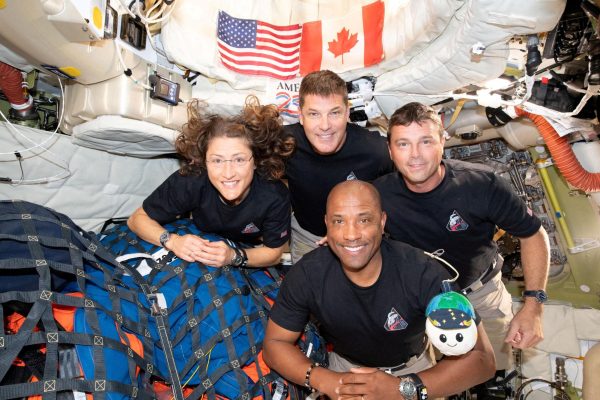
The crew, comprised of Commander Reid Wiseman, Pilot Victor Glover, and Mission Specialists Christina Koch and Jeremy Hansen, reported a transformative experience during their ten-day journey. Beyond the scientific data collected, the astronauts emphasized the profound human connection fostered in the cabin. “We went as friends and came back as best friends,” the crew shared in a joint statement, describing their connection as the closest bond possible outside of family.
Following a precise ten-day mission, the Orion spacecraft began its descent on April 10. After a swift 15-minute atmospheric reentry, the capsule splashed down safely at 5:07 pm EDT.
NASA recovery teams reached the site within 90 minutes, confirming that all four astronauts were in excellent health and spirits. While the crew is currently undergoing standard post-mission rehabilitation to regain their “Earth legs” after the rigors of microgravity, their progress has been met with cheers from the global community.
The success of Artemis II is more than just a single flight; it is a vital stepping stone for NASA’s long-term vision. This mission proves the viability of deep-space travel for the next generation, potentially paving the way for permanent lunar bases and future missions to Mars.
“This is the first step into our future,” a NASA spokesperson noted. Whether the agency’s full expansion takes a decade or a century, the success of these four brave individuals has ensured that humanity’s footprint in the cosmos will only continue to grow.

