




















Are you interested in playing golf but don’t know where to start? It may seem like a difficult sport at first, but if you can get the basics down, you can start playing in no time! Beginners should start by learning the essential equipment, types of shots, the purpose of the different kinds of clubs, and how a course is set up. This is a beginner’s guide to get you swinging into action.
Let’s start with the key equipment required. To get started, you need: a bag, a driver, 3 to 9 irons, a pitching wedge, a lob wedge, an approach wedge, a putter, and, of course, some golf balls. These items will carry you through the entirety of the game and beyond.
Now, let’s work on some of the shot types in golf. Most of these revolve around the wedges and can be done with all forms of them. The flop shot is a commonly used shot when you are about 20 yards from the green. The chip, also known as the bump-and-run, is a low-height, long-rolling-distance shot used to approach the cup when you are very close to the green. Last but not least, we will go over a stinger, which is done with a driver when you tee it up higher than normal. You hit the ball lower on the club head, allowing for a low, straight hit that slowly rises. This is used when you might have to go through some trees ahead of the tee box.
But what is each club even used for? To start, the driver and the woods are the clubs you use if you are either on the tee box or more than 250 yards away from the green. These clubs are meant to go very far, but it is easy to make a mistake with them because one small slip in the hit can completely change where the ball may go. Then, there are the irons, which are much easier to hit and can be used anywhere from 200 yards away to as close as 75 yards away. The lower the iron number, the farther the ball will go, and the higher the number, the higher the ball will go. Finally, the wedges are used for higher approach shots when you are closer to the green. Although they take time getting accustomed to, when you finally become proficient with them, it quickly becomes worthwhile.
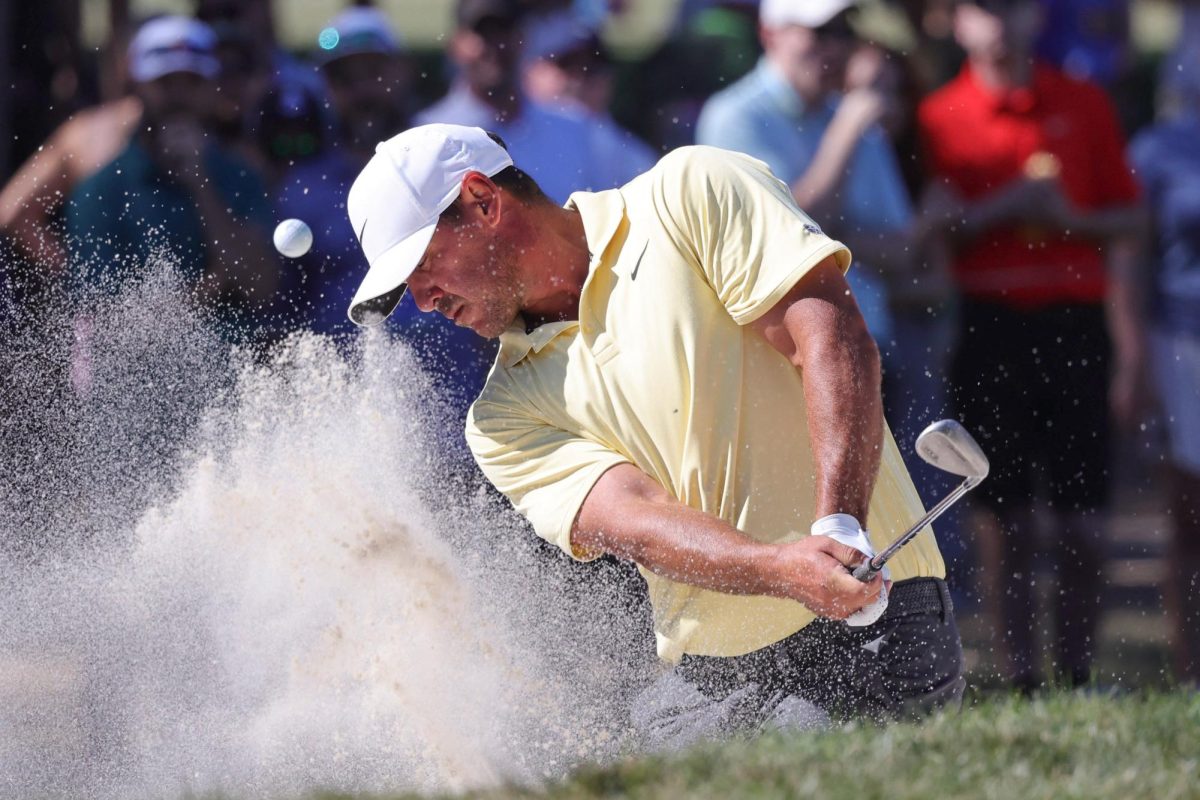
Now that you have honed all of your golf skills, let’s get you on the course. You have four main types of areas you will experience in the course. The rough is taller grass that is more difficult to hit out of, and is meant to punish you for a bad hit. The fairway is a great place to be; it has short, fluffy grass that you can easily hit off of and try to stay on until you reach the green. The very short grass and the semi-short grass around it are what you would chip and putt on. However, one place you never want to land is in a bunker, which is a sand-filled pit on the course that you have to use a wedge, and is very difficult to get out of
With all of this in mind, knowing the basics of golf, including equipment, shot types, clubs, and the course, will help you when you’re first starting. There are plenty of other things you still need to learn, but the only way to learn is to practice. So, go out to your local course or driving range and get some shots in, as it can only get better from here.
References: “A Beginner’s Golf Guide: What every new golfer should know when picking up the game.” Golf Digest, 15 June 2020, https://www.golfdigest.com/story/the-complete-beginner-s-guide-to-golf. Accessed 15 January 2026.
“A True Beginner’s Guide to Golf.” Wilson, https://www.wilson.com/en-us/blog/golf/how-tos/true-beginners-guide-golf. Accessed 15 January 2026.

